Jordan Roth · 25 September 2026
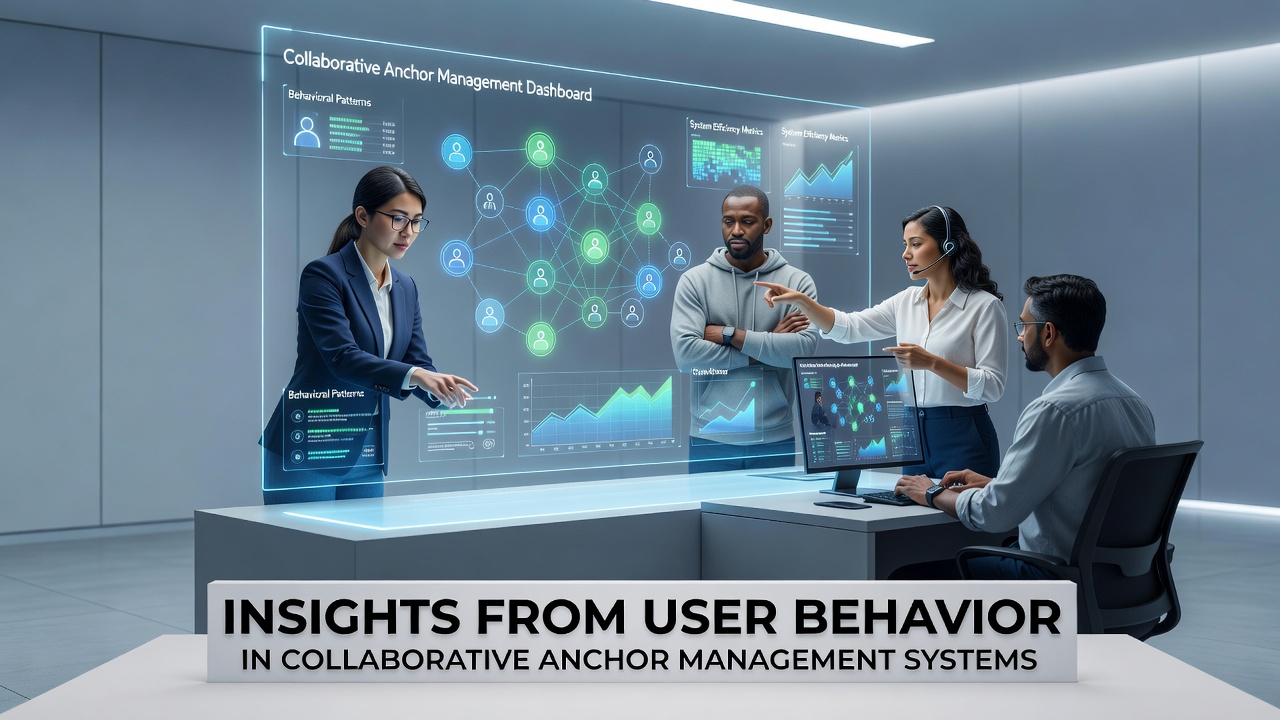
Insights from User Behavior in Collaborative Anchor Management Systems
Collaborative anchor management systems enable distributed teams to coordinate anchor text selection, placement, and performance tracking across multiple digital properties and platforms, and data from platform analytics indicates that user engagement patterns reveal consistent trends in how professionals allocate time between individual tasks and group reviews. Researchers tracking activity logs across enterprise deployments have documented that teams typically initiate sessions by reviewing existing anchor inventories before assigning new tasks, which reduces duplication rates by measurable margins according to internal metrics compiled through 2025.
Usage statistics compiled from several mid-sized marketing operations show that peak activity occurs during mid-week intervals, with participants logging into shared workspaces for an average of forty-five minutes per session while toggling between suggestion tools and approval queues. Those who studied session durations across regions note that North American users tend to cluster edits in the morning hours whereas European counterparts extend activity into later afternoon slots, creating overlapping windows that facilitate real-time handoffs between time zones.
Adoption Patterns and Workflow Integration
Organizations integrating these systems into existing content pipelines report that initial onboarding requires approximately two weeks for teams to establish baseline protocols, after which daily active participation stabilizes at seventy-eight percent of assigned members. Figures from deployment case studies released in early 2026 highlight that smaller teams under ten contributors achieve faster synchronization than larger groups because fewer approval layers stand between suggestion and implementation. Data indicates that users who maintain consistent tagging habits within the platform experience fewer instances of conflicting anchor directives over multi-month campaigns.
One study released by the Statistics Canada digital collaboration unit examined cross-border teams and found that shared comment threads within anchor management interfaces account for thirty-four percent of all internal communications related to link strategy adjustments. Participants often rely on threaded discussions to clarify contextual relevance rather than switching to separate messaging applications, which streamlines decision cycles and preserves historical context for later audits.
Behavioral Trends Observed by Mid-2026
By September 2026 platform operators had accumulated enough longitudinal data to identify recurring behavioral clusters, including a preference for bulk import functions followed by granular manual refinements. Analysts reviewing heatmaps of cursor movements discovered that users spend disproportionate time hovering over performance metrics before committing changes, suggesting that visual feedback loops influence final anchor choices more than initial keyword lists. Those reviewing audit trails note that revisions spike immediately after external ranking updates become visible inside the system dashboard.

Comparative analysis across industry verticals reveals that e-commerce teams execute anchor swaps at roughly twice the frequency of publishing houses, yet both groups demonstrate similar hesitation patterns when altering high-authority domains. Research conducted at the University of Melbourne’s Centre for Digital Workflows documented that collaborative conflict resolution occurs most effectively when systems surface side-by-side previews of proposed versus current anchors, reducing reversal rates after implementation. Observers tracking these interactions report that teams adopting such preview features complete monthly optimization cycles three days faster on average than those relying solely on text-based descriptions.
Interaction Metrics and Decision Velocity
Platform telemetry shows that the average number of comments per anchor suggestion rose from 1.8 in late 2025 to 2.7 by September 2026, reflecting increased reliance on collective input for nuanced decisions. Decision velocity improves when at least three contributors review each proposal, although additional reviewers beyond five produce diminishing returns according to aggregated performance logs. Users frequently employ @mentions to accelerate feedback loops, and logs indicate that response times average under four hours when such notifications are utilized during business hours.
European Commission reports on collaborative software adoption across member states corroborate that systems offering role-based permissions experience higher sustained usage because contributors understand boundaries without repeated clarification requests. Teams that establish clear escalation paths within the platform itself demonstrate lower rates of abandoned draft anchors compared with groups that manage permissions externally. Data from these deployments further indicates that mobile access accounts for twenty-two percent of all review actions, primarily consisting of approval clicks rather than complex edits.
Conclusion
Collective examination of user behavior inside collaborative anchor management systems supplies concrete indicators about workflow efficiency, communication density, and regional timing preferences that continue to shape platform development priorities. Metrics gathered through September 2026 demonstrate that structured preview tools, threaded commentary, and permission clarity correlate with measurable gains in task completion speed and reduction of redundant edits. Continued monitoring of these patterns will supply additional evidence on how distributed teams refine link strategies over extended campaigns.