Blake Schmitt · 9 October 2026
Shifts in Anchor Referencing Habits Within Decentralized Team Wikis
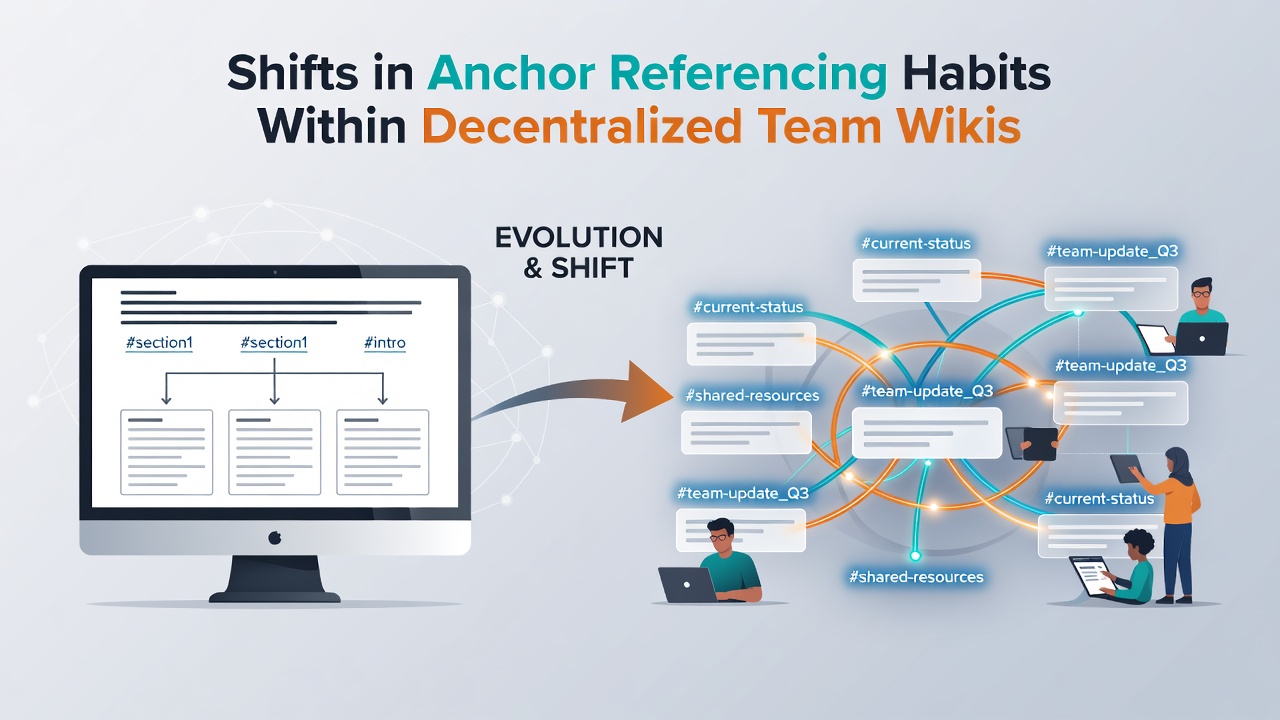
Teams working in decentralized wiki environments have adjusted their anchor referencing practices as platforms evolve and collaboration patterns change, with observers noting that content updates happen more frequently across distributed nodes and this creates pressure on traditional section linking methods. Researchers at academic institutions have tracked these adjustments through longitudinal studies that examine how contributors reference specific sections when pages are edited simultaneously by multiple users in different locations.
Platform Changes Driving New Patterns
Decentralized team wikis built on distributed protocols now handle content versioning differently than centralized systems, and this has led contributors to favor anchors that remain stable even when surrounding text shifts position or gets reorganized during merges. Data from collaborative software analyses show that teams using these systems rely less on numeric position-based anchors and more on semantic identifiers that persist through content forks and synchronization events. One study released in October 2026 documented a measurable increase in the use of labeled anchors that include descriptive keywords rather than sequential numbers, and this trend appeared consistently across organizations managing technical documentation in distributed setups.
Contributors often discover that anchors tied to fixed paragraph identifiers survive content merges more reliably than those based on heading text alone, while teams that adopted custom anchor schemas reported fewer broken internal references after large-scale updates. What's interesting is how these habits spread through shared templates that new members inherit when they join existing projects, and the templates themselves carry the preferred referencing conventions forward across different wiki instances.
Usage Data Across Organizations
Figures from research conducted at the University of Toronto reveal that anchor usage in decentralized wikis has moved toward embedded metadata tags that travel with content blocks during replication, and this approach reduces the frequency of manual anchor repairs after conflicts resolve. Teams in engineering and research groups show higher adoption rates for these tagged anchors compared with administrative teams, according to aggregated usage logs collected over eighteen months. The shift appears tied to the need for precise cross-references in documents that undergo regular structural changes without centralized editorial oversight.
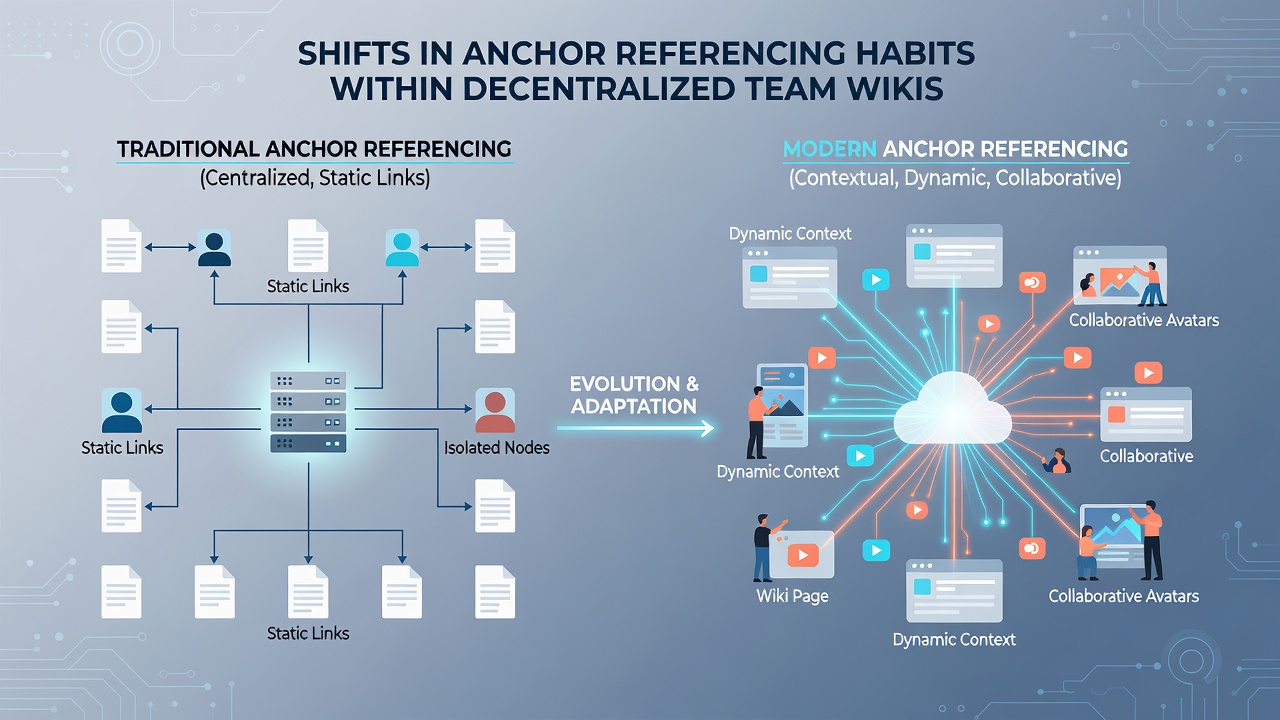
But here's the thing: when content is replicated across multiple servers, anchors that depend on absolute positioning often fail to resolve correctly after independent edits occur on separate copies. Observers note that many teams now insert anchors at the paragraph level using unique identifiers generated at creation time, and this method maintains link integrity even when sections are reordered or merged from parallel branches. Academic papers examining these systems indicate that the practice reduces maintenance overhead for wiki administrators who previously spent significant time fixing broken internal links after each synchronization cycle.
Adoption of Semantic Anchors
Industry reports compiled by the Association for Computing Machinery highlight that semantic anchors, which incorporate topic keywords alongside unique codes, have gained traction in fields where precise section retrieval matters for compliance and audit trails. These anchors allow search functions within the wiki to locate referenced material even when the surrounding page structure has been altered by contributors working asynchronously. Teams that implemented these anchors as standard practice found that onboarding new members required less explanation about link maintenance, since the identifiers remained consistent across updates.
Yet the transition has not been uniform, and some organizations continue to use legacy heading-based anchors for simpler documentation projects where content changes remain infrequent. Researchers point out that the choice often correlates with the complexity of the team's workflow and the frequency of concurrent edits rather than any single platform feature. In environments where multiple contributors edit the same page during overlapping time windows, the preference for persistent identifiers becomes more pronounced, and logs show fewer instances of link rot over time.
Conclusion
Patterns in anchor referencing within decentralized team wikis continue to evolve as platforms introduce new tools for content synchronization and version control. The evidence collected through multiple studies points to a gradual movement toward identifiers that survive structural changes and distributed edits, and this movement appears driven by practical needs rather than top-down mandates. Organizations that monitor their internal linking practices have documented measurable improvements in reference reliability when they adopt semantic and tagged approaches. As decentralized wikis expand into additional sectors, the habits formed in technical and research teams offer a reference point for how referencing conventions may develop elsewhere.