Devon Schmitt · 23 October 2026
Tracing Reference Lifecycles Across Distributed Editing Platforms
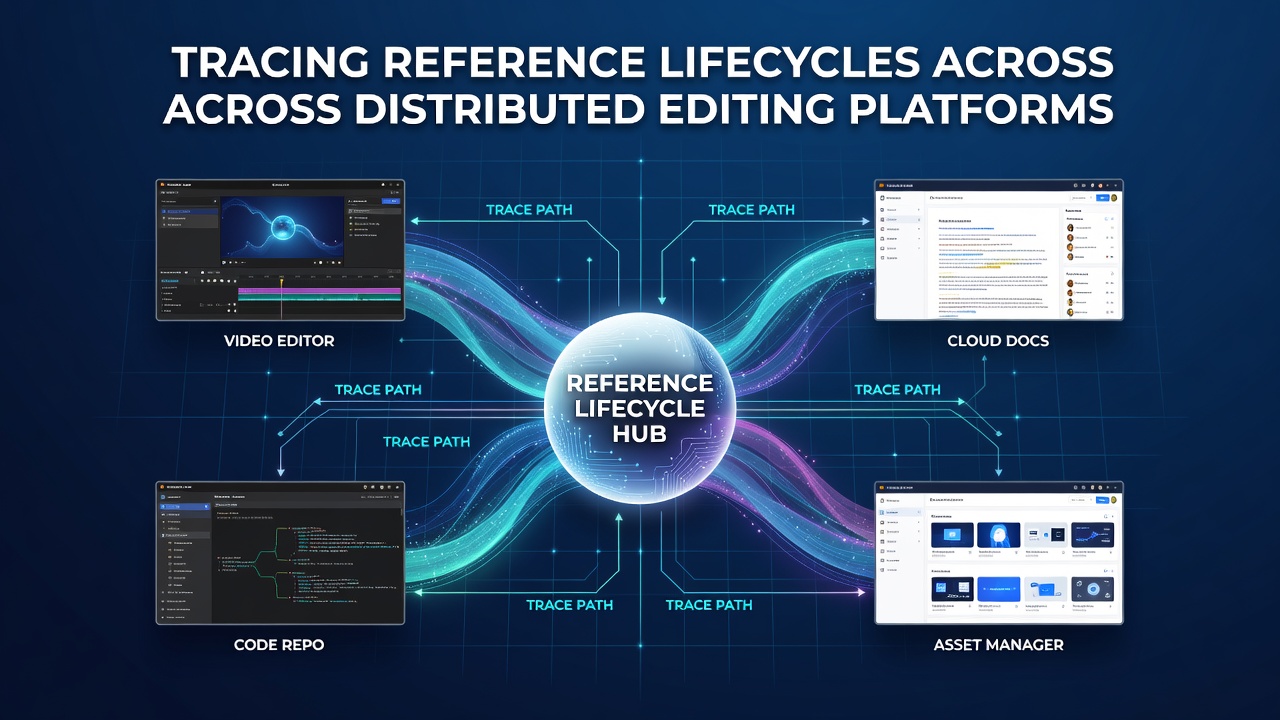
Distributed editing platforms rely on mechanisms that track how references evolve from creation through modification, replication, and eventual archival or deletion, and these lifecycles determine consistency across nodes that operate independently yet must converge on shared states. Researchers at institutions studying collaborative systems have documented how references such as citations, pointers, and embedded identifiers move through operational logs that record every transformation applied to the underlying data structures.
Core Components of Reference Tracking
Operational transformation techniques form one foundation for maintaining reference integrity, while conflict-free replicated data types handle concurrent updates without requiring central arbitration, and both approaches generate metadata that records the origin, version, and dependencies of each reference. Studies from European research consortia show that platforms built on these models log every reference change as a sequence of operations that can be replayed to reconstruct prior states, which supports audit trails required in regulated environments.
Data from academic deployments indicates that reference lifecycles typically pass through distinct phases including initial insertion, propagation to peer nodes, conflict resolution when divergent edits arise, and eventual stabilization once all replicas agree. In October 2026 several open-source frameworks released enhancements that extended these phases to include automated expiration rules for stale references, reducing storage overhead in long-running collaborative sessions.
Propagation and Convergence Mechanisms
Nodes exchange operation histories through gossip protocols or structured overlays that prioritize recent changes, and this exchange allows references to be validated against the global order established by vector clocks or similar causality trackers. Observers note that convergence speed varies with network latency and the density of references within a document, since each reference may carry its own set of dependencies that must be satisfied before the reference becomes visible to all participants.
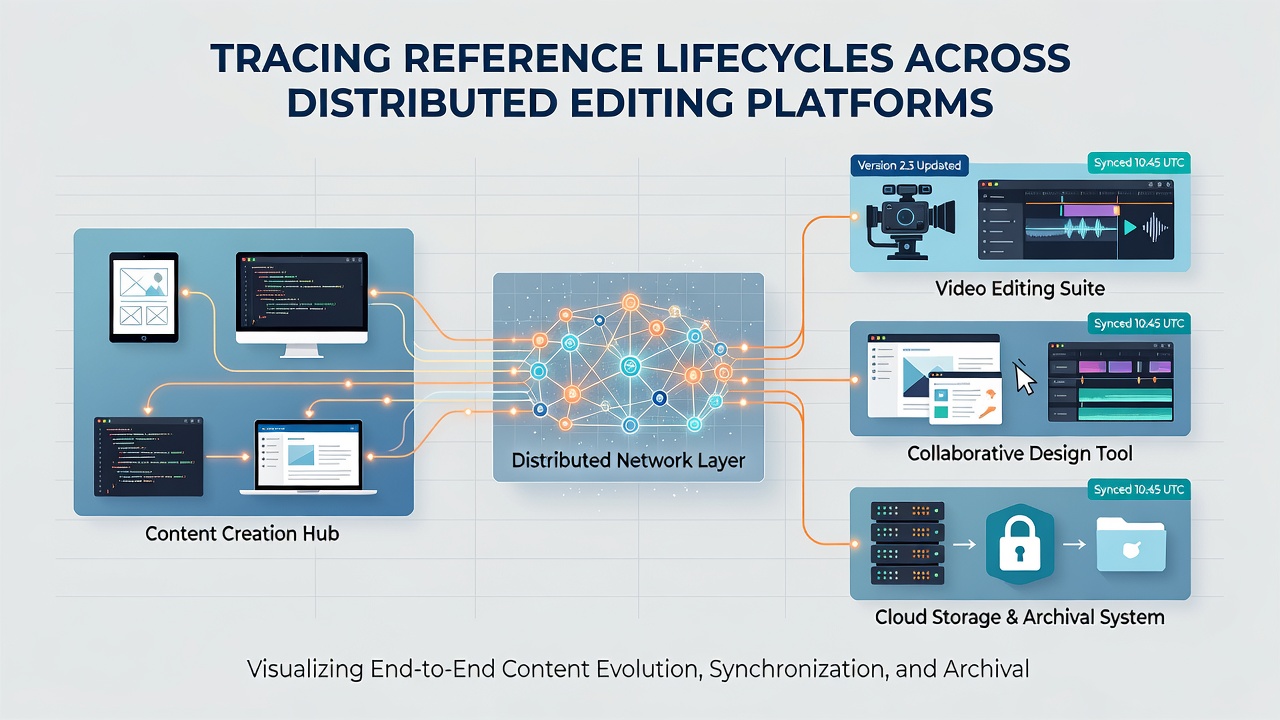
According to reports issued by Canadian research networks, platforms that implement fine-grained reference versioning achieve higher accuracy when tracing the lineage of individual elements across forks and merges. These systems store reference metadata alongside the primary content so that rollback operations can restore both the text and the links or citations that pointed to external resources at any given point in time.
Challenges in Multi-Platform Environments
When documents move between heterogeneous editing tools, reference formats often require translation layers that preserve semantic meaning while adapting to the target platform's internal representation. Research indicates that mismatches in identifier schemes frequently produce dangling references that point to nonexistent locations, and automated detection routines have become standard in production deployments to flag such issues before users encounter broken navigation.
Industry analyses from Australian technology institutes highlight how reference lifecycles intersect with access control policies, since permissions attached to a referenced object may change independently of the documents that contain the reference itself. This separation necessitates additional checks during replication to ensure that users do not gain unintended visibility through transitive reference chains.
Conclusion
Tracing reference lifecycles across distributed editing platforms requires coordinated use of transformation logs, causality tracking, and metadata propagation that together maintain consistency without central control. As platforms continue to incorporate automated lifecycle policies and cross-system translation, the ability to reconstruct the full history of any reference grows more robust, supporting both collaborative workflows and compliance requirements in diverse operational settings.